Saturday, September 19, 2026 Vol. 1, No. 1

Slower Hours

Home coffee, reported from one kitchen

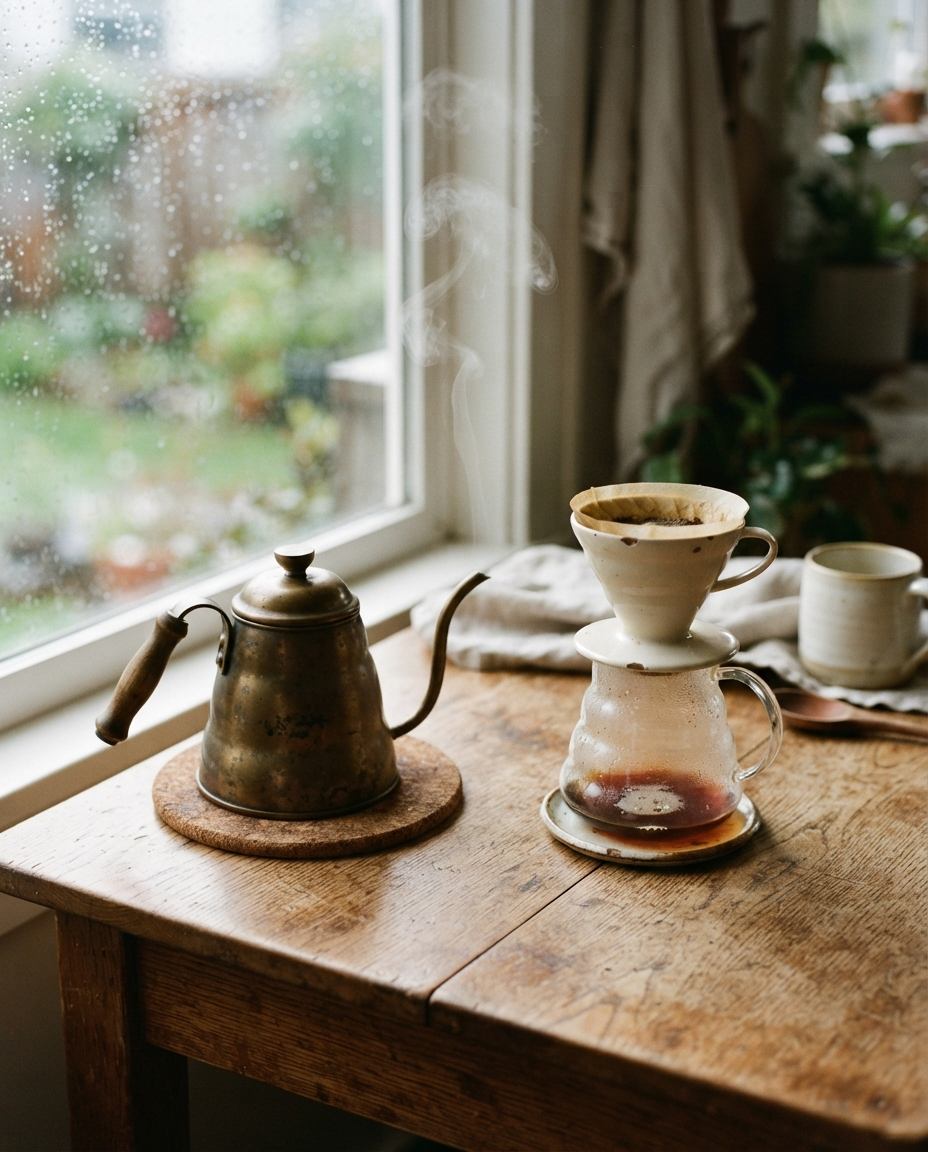
A brass gooseneck kettle resting on a cork trivet, a thin wisp of steam at the spout, with a pour-over cone and glass carafe waiting beside it.
Off the heat, counted to thirty: roughly the whole brewing range, without a thermometer.
Brewing · Lead story

The most common mistake in an American kitchen is the kettle, not the coffee

Water at a full boil pulls the bitter compounds out of the grounds before the rest have finished. The Specialty Coffee Association puts the brewing range at 195 to 205 °F — and closing that gap costs nothing but half a minute.

6 min read

Brewing

What actually changes the cup

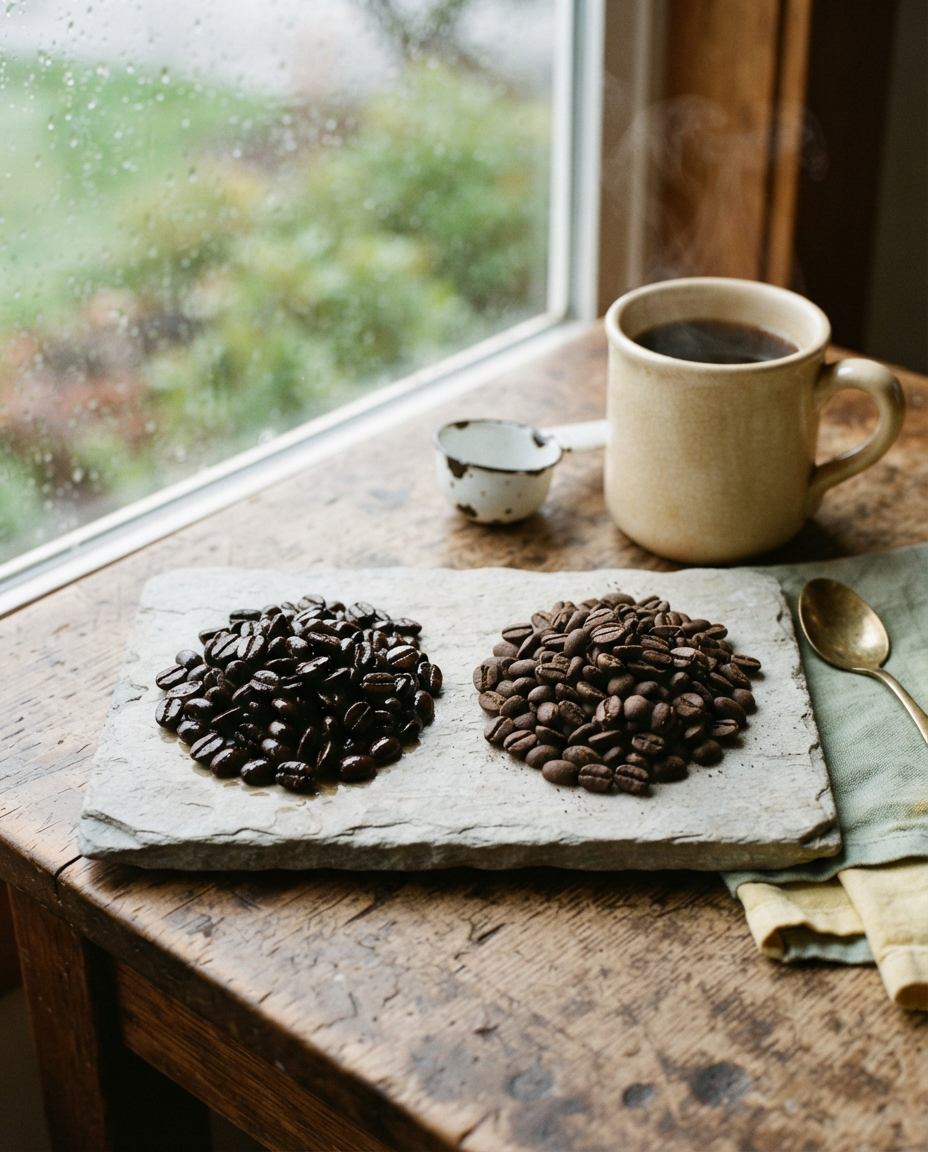
Two piles of dark roasted coffee beans side by side on a slate board, the left glossy with surface oil, the right matte and dry.
Buying

The date printed on most coffee bags is the wrong date

“Best by” records when a company stopped being willing to vouch for a bag. The number that decides how the coffee tastes is the roast date, and bags that omit it are usually omitting it for a reason.

4 min read

Research Desk

Claims checked against published work

Supported

Freezing whole beans is good practice, and the old advice had it backwards

Sealed, portioned and ground straight from cold, frozen beans break into more uniform particles, and uniform particles extract more evenly. What ruins coffee is the in-and-out: pulling the same bag from the freezer every morning.

Source: University of Bath, Scientific Reports, 2016 ·

Myth

Espresso is the strongest coffee you can order

Ounce for ounce, yes. Cup for cup it is not close. A single shot runs about 64 mg of caffeine; an 8-ounce cup of drip runs about 95 mg. Espresso is concentrated, not caffeinated — the intensity is body and flavor, not a bigger dose.

Source: USDA FoodData Central ·

Myth

Coffee dehydrates you, so every cup needs a glass of water

For habitual drinkers, it does not. Researchers had men drink four cups of coffee a day, then the same volume of water, and switch, measuring body water, blood and urine. No meaningful difference. Drink the water if you like it, just not out of guilt.

Source: University of Birmingham, PLOS ONE, 2014 ·