Coffee is 98 percent water, and most kitchens never think about the 98
Chlorine survives the brew. Very hard water gives flat, chalky coffee and a kettle that furs up within a month. And distilled water, which sounds like the pure option, makes the worst cup of all.
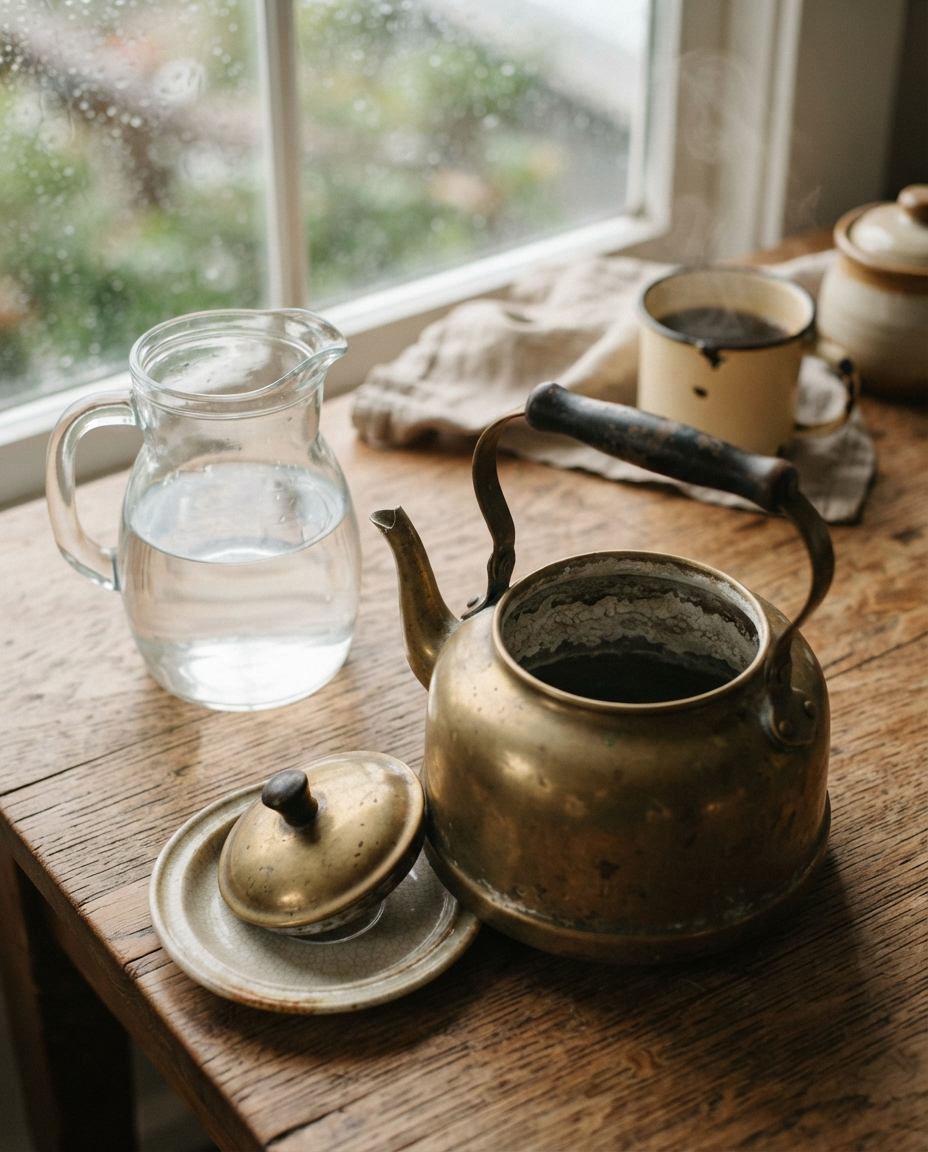
A brewed cup of coffee is roughly 98 percent water and about 2 percent dissolved coffee solids. People spend a great deal of attention on the 2 percent, which is reasonable, since it is the part with the flavor in it. Almost nobody thinks about the rest, which is the part doing the dissolving.
What goes wrong
Chlorine. Municipal water is treated, and in some systems you can smell it at the tap. Chlorine is volatile but it does not vanish in a brewer, and if your water tastes faintly of a swimming pool then your coffee will too. This is the single most common water problem in an American kitchen and the easiest to fix.
Hardness. Dissolved calcium and magnesium are what make water hard. Some mineral content is essential — see below — but a lot of it gives coffee a flat, chalky quality and a dulled finish. It also builds limescale inside kettles and drip machines, which restricts flow, lowers brewing temperature, and eventually kills the appliance.
Softened water. A household softener exchanges calcium for sodium. Excellent for plumbing and laundry; poor for coffee, which comes out oddly slack and salty-edged. If you have a softener, it is worth having one tap plumbed around it.
Distilled and deionized water is the one to avoid entirely. Extraction relies on dissolved minerals to bind and carry flavor compounds out of the grounds. Strip the water bare and it extracts poorly, producing a hollow, papery cup. Pure water does not make purer coffee.
What actually helps
- A cheap carbon filter pitcher, filled the night before and kept in the refrigerator. Carbon removes chlorine, which is most of the problem for most households, and it costs very little. Change the cartridge on schedule — an exhausted filter is worse than none.
- Never brew with hot tap water. It has been sitting in a heater, picking up dissolved metal and sediment. Start from cold and heat it yourself.
- Do not re-boil the same kettle water twice. Each boil drives off dissolved gases and concentrates what remains. Fresh water each time.
- Descale on a schedule. If you can see white crust at the waterline, your machine has been brewing cooler than it should for a while.
- On a well? Get the water tested once, for reasons that extend a very long way past coffee.
A note on where you live
How much any of this matters depends on the tap it starts at. Cities drawing from surface water — the lakes and rivers that supply much of the Pacific Northwest and New England — tend to run soft, which is a piece of luck for coffee. Much of the Southwest and the Midwest draws from groundwater and runs considerably harder, and those kitchens will notice far more from a filter.
Your municipal utility publishes an annual water quality report, and it is free. It will tell you your hardness and how the water is treated, which is more than most people know about the main ingredient in what they drink every morning.
How to know it matters
Run the experiment. Brew the same beans, ground the same way, at the same ratio, twice: once with tap water and once with filtered or bottled spring water. Taste them side by side while both are warm.
In some houses the difference is unmistakable and slightly annoying to discover. In others there is no difference at all, which is a genuinely useful thing to learn, because it means you can stop thinking about water and go back to thinking about the coffee.