Espresso is concentrated, not caffeinated
Ounce for ounce it is the strongest coffee on the menu. Cup for cup it is not close: about 64 mg of caffeine in a single shot against about 95 mg in an 8-ounce cup of drip, both figures from the USDA’s public nutrient database.
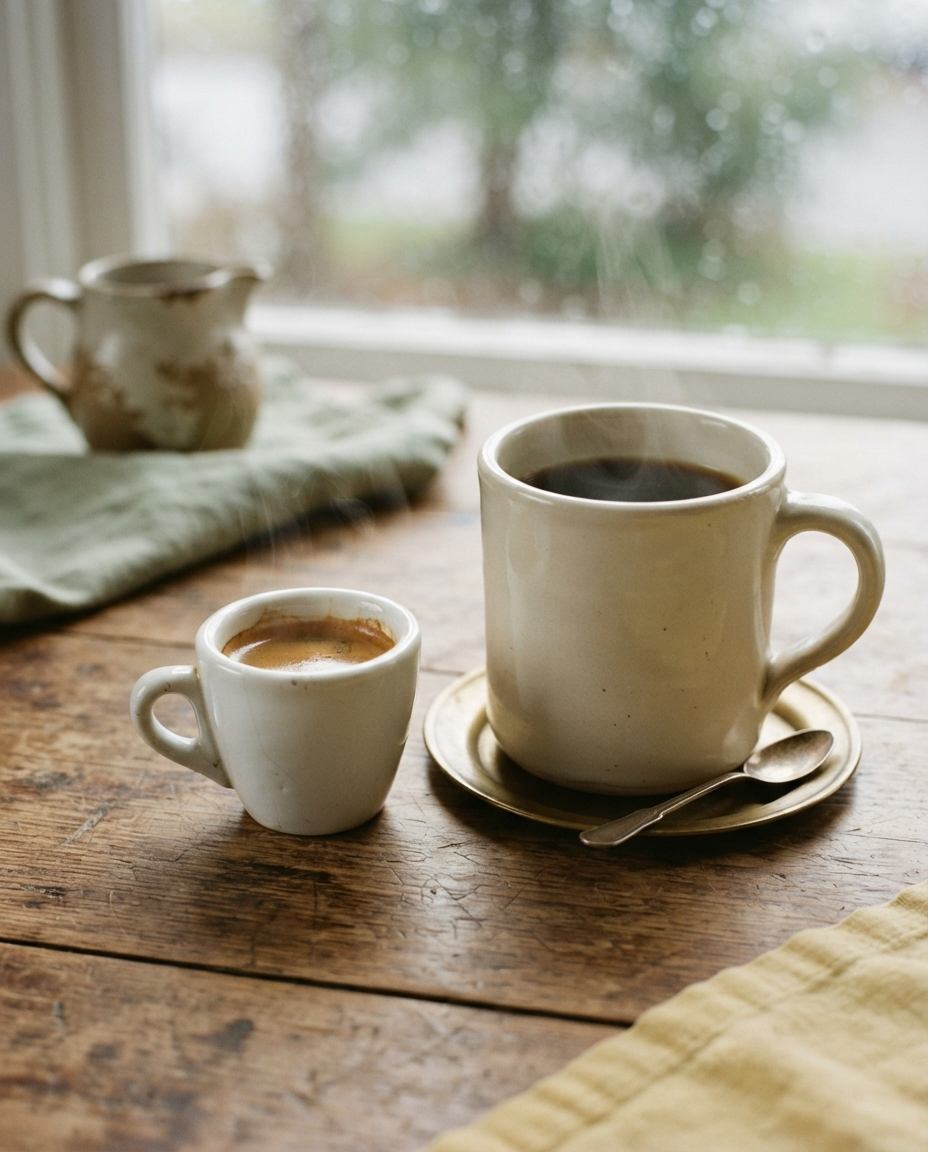
The claim turns up everywhere: espresso is the strongest thing you can order, so a shot after dinner will keep you awake in a way a cup of drip would not. It is one of the few pieces of coffee folklore where the answer depends entirely on how you ask the question.
The numbers
The USDA’s FoodData Central, which is free and searchable by anyone, gives the standard reference values:
- Espresso, single shot (about 1 fl oz): roughly 64 mg of caffeine.
- Brewed coffee, 8 fl oz: roughly 95 mg of caffeine.
Per ounce, espresso carries something like eight times the caffeine. Per serving, the mug wins comfortably, because it is eight times the volume.
Verdict: myth, on the question people are actually asking. Espresso is more concentrated. It is not a larger dose. The intensity you taste is body and flavor, not caffeine.
What this means at the table
The person who orders a double shot and the person who drinks two mugs of drip coffee while reading the paper are having roughly comparable mornings, in caffeine terms. One of them simply did it in ninety seconds.
It also means that a single after-dinner espresso is, for most people, a smaller caffeine decision than a refill of the pot at the same hour — which is the opposite of how most households treat it.
Where the numbers move
These are reference figures, not laws, and real cups vary more than either number suggests.
- Dose and ratio. More coffee per cup means more caffeine. A strongly brewed mug can run well above 95 mg.
- Serving size. The 8-ounce cup is a measuring convention. A large takeout coffee is frequently 16 or 20 ounces, which changes the arithmetic entirely.
- Species. Robusta carries roughly double the caffeine of arabica, and appears in some espresso blends specifically for the body it gives.
- Roast level. Barely matters. Caffeine is thermally stable through roasting. Dark roasts taste more aggressive, which is not the same as being stronger.
- Brew time. Longer contact extracts more caffeine, which is part of why cold brew concentrate is in a category of its own.
A note on how much
The FDA has said that 400 mg of caffeine a day — four or five 8-ounce cups — is not generally associated with negative effects for healthy adults. That is a population figure and not a prescription. Sensitivity varies enormously between people, and it changes with pregnancy, medication, heart conditions, anxiety and sleep disorders.
This article reports published numbers. What they mean for your body is a question for your physician, not for a coffee publication.